







EMASI introduces the Dual Homeroom Model for Grade 1 in the 2026-2027 academic year
When choosing a bilingual Grade 1 school, parents are not only concerned about how much English their children can learn, but also about how they experience learning during their early years. At this stage, students are not simply learning how to read or write. It is a foundational period for shaping the way they absorb knowledge, think, and build long term learning habits.
For families choosing a bilingual Grade 1 environment, this journey becomes even more meaningful as students begin adapting to two languages, two forms of expression, and two different learning environments at the same time.
For this reason, the key question is not only how much English children can learn, but how bilingual learning is structured in a way that supports natural and sustainable development from the very beginning.
At EMASI, this question became the foundation for developing the Dual Homeroom Model for Grade 1 within a WASC accredited education system.
When bilingual education is more than simply dividing learning time between two languages
In many bilingual programs today, English and Vietnamese are often organized by subject areas or based on a percentage of instructional time. Students may study certain subjects in English, while others are taught in Vietnamese.
This approach helps students increase exposure to both languages while creating an early bilingual learning environment.
However, at the early primary level, when children are still developing their thinking and learning habits, what matters is not only the number of hours spent in each language, but also how learning experiences are connected together.

At EMASI, the Dual Homeroom Model is designed with two homeroom teachers responsible for two distinct academic programs:
- International teachers deliver the Cambridge Assessment International Education program in English
- Vietnamese teachers deliver the Ministry of Education and Training (MOET) curriculum in Vietnamese
The timetable is organized into morning and afternoon sessions, with students rotating between classrooms and teachers to ensure focused and balanced learning experiences in each language environment.
Although each teacher is responsible for a separate curriculum, both work closely together to monitor students, connect learning content, and create a continuous learning journey for the classroom.
Learning through language, not switching between languages
One of the core strengths of the model lies in its approach to bilingual learning.
At EMASI, bilingual education is not simply about increasing the number of English learning hours. Instead, it is about helping students use language as a tool for thinking, questioning, and understanding knowledge.
- Students access learning content in both English and Vietnamese through an age appropriate pathway
- Teachers collaborate closely to ensure consistency in learning content and academic progress
- The transition between the two language environments becomes more natural for students
This approach helps students develop balanced bilingual learning abilities from Grade 1, rather than relying solely on memorization or direct translation.
Teacher quality: The key foundation for early learning development
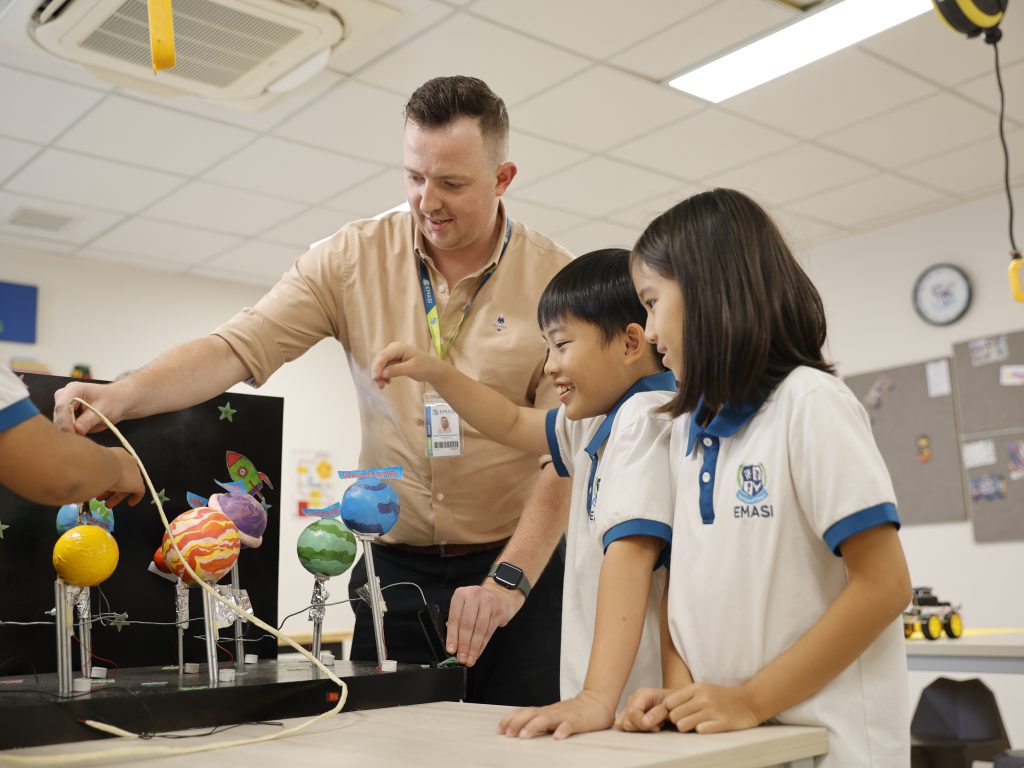
To ensure the effectiveness of the model, EMASI focuses on building a teaching team aligned with early years educational development.
International teachers at EMASI are recruited directly from the United Kingdom and possess specialized academic foundations in Primary Education, a standard prioritized by the School to ensure academic quality and alignment with the developmental needs of young learners.
- Understanding the developmental characteristics of primary students
- Guiding literacy skills through a structured learning pathway
- Building long term academic foundations and learning skills
Building a balanced bilingual foundation from Grade 1
The program is designed with approximately 60% of learning time conducted in English while still maintaining the depth of the Vietnamese curriculum.
- Academic English proficiency
- Strong Vietnamese language abilities
- Independent thinking and learning skills
Rather than prioritizing one language over the other, the model aims to build a balanced developmental foundation for students within a bilingual learning environment.
A Grade 1 bilingual school model inspired by effective international education practices
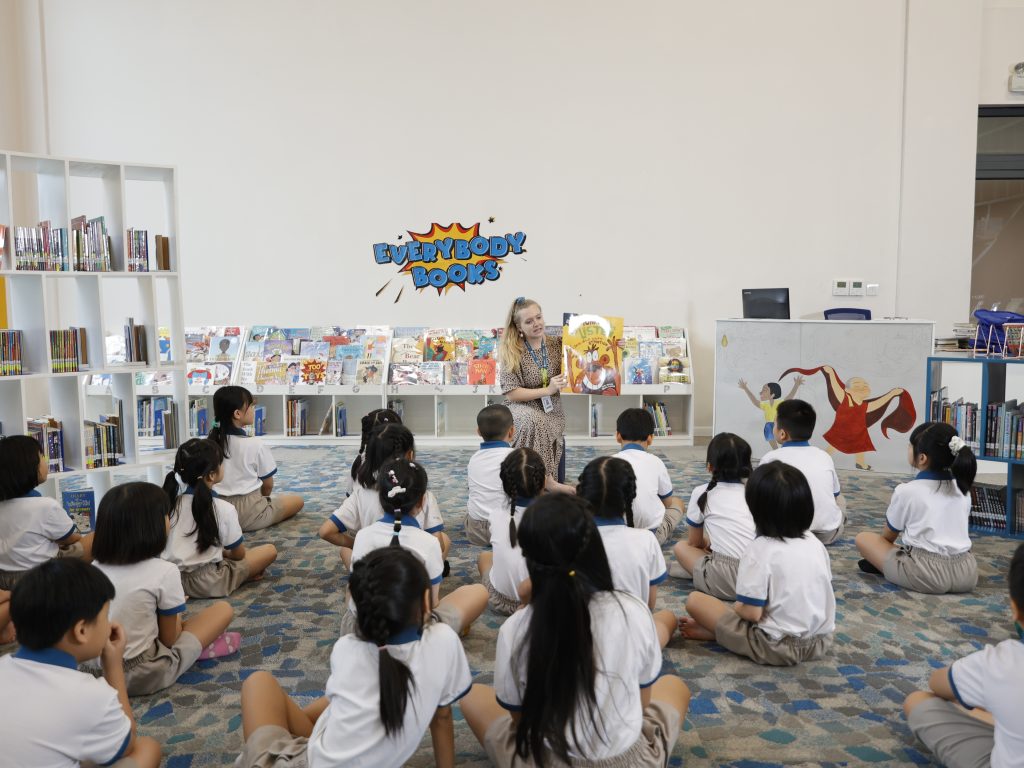
Two teacher or co teaching models have been implemented in many international education systems to support sustainable bilingual development.
At EMASI, the Dual Homeroom Model is developed based on these educational practices while being adapted to suit Vietnamese students beginning their bilingual journey from Grade 1.
- Language is connected to students’ learning experiences
- The early years play an essential role in building long term foundations
- Classroom structures and teaching methods must align with learning goals
Through the Dual Homeroom Model, EMASI aims to build a learning environment where two teachers, two languages, and one shared direction work together to create a strong learning foundation from Grade 1.